
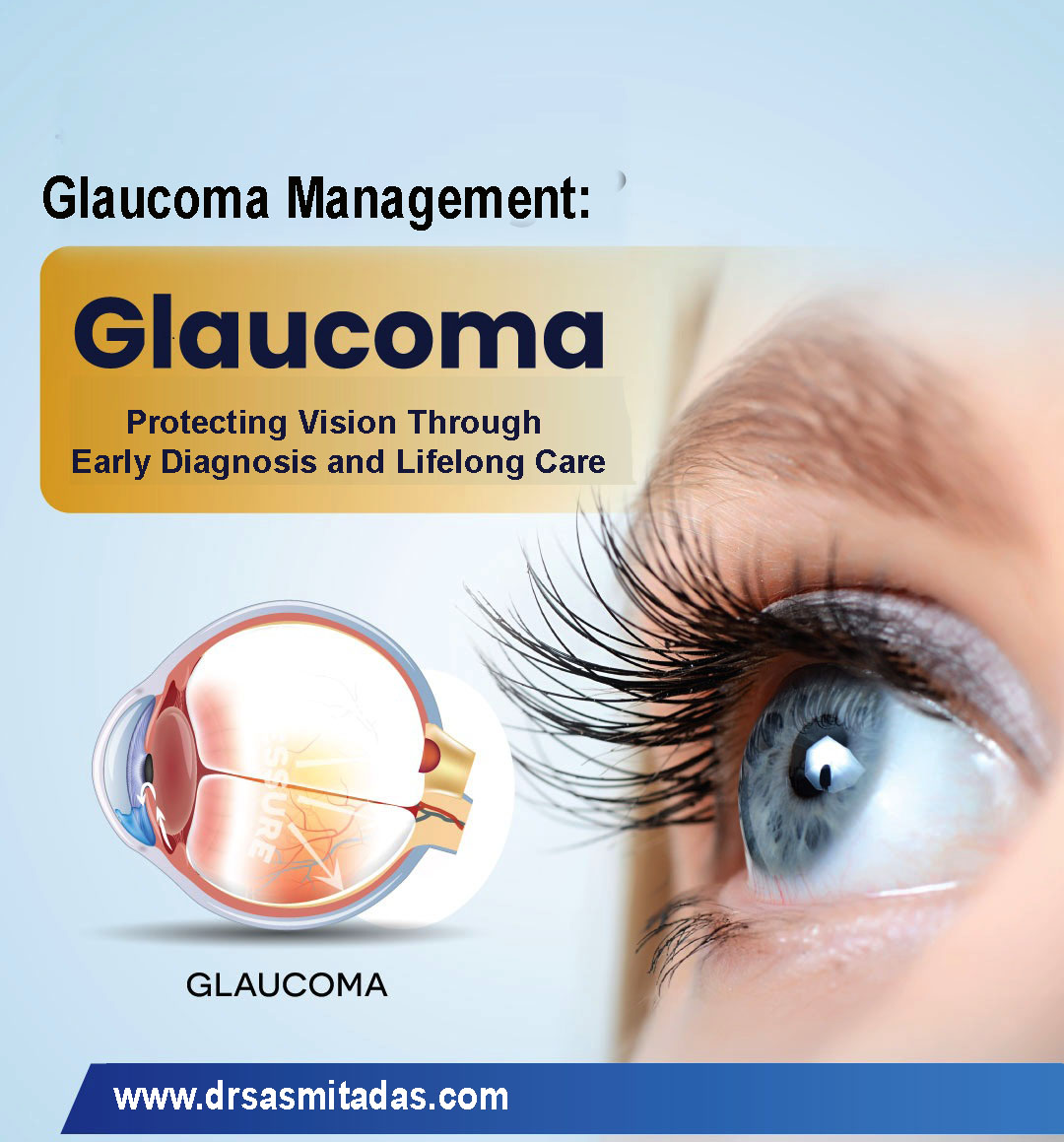
Glaucoma is a chronic eye disease known as the “silent thief of sight.” Early diagnosis, regular monitoring, and lifelong management through medications, laser therapy, and surgery can protect vision and improve quality of life.
What Is Glaucoma?
Glaucoma is a chronic eye disease in which damage to the optic nerve leads to progressive and irreversible vision loss. In most cases, this damage is caused by increased intraocular pressure (IOP).
Since glaucoma often has no symptoms in the early stages, it is called the “silent thief of sight.” Early detection and proper management are crucial to preserving vision.
Goals of Glaucoma Management
The primary goals of managing glaucoma are:
- Lowering and maintaining eye pressure at a safe level
- Preventing further optic nerve damage
- Preserving existing vision
- Improving long-term quality of life
Glaucoma is a lifelong condition, so management requires continuous care and regular follow-up.
Methods of Glaucoma Management
1. Medical Management (Eye Drops)
- Eye drops are usually the first line of treatment
- Reduce eye pressure by decreasing fluid production or improving drainage
- Must be used consistently as prescribed
- Non-compliance can lead to disease progression
Regular follow-up is essential to monitor effectiveness and manage side effects.
2. Laser Treatment for Glaucoma
- Laser treatment is safe and effective when eye drops are insufficient or not tolerated
- Performed under topical anaesthesia (eye drops)
- Quick, painless outpatient procedure
- Common treatments include Selective Laser Trabeculoplasty (SLT) and Laser Peripheral Iridotomy (LPI)
Laser therapy can reduce dependence on long-term medications.
3. Surgical Management of Glaucoma
- Surgery is considered when medications and laser treatments fail
- Improves fluid outflow and lowers eye pressure
- Suitable for moderate to advanced glaucoma
- Options include conventional glaucoma surgery or minimally invasive glaucoma surgery (MIGS)
Surgical intervention provides long-term pressure control.
Importance of Regular Monitoring
Lifelong monitoring is essential for effective glaucoma management, including:
- Eye pressure measurements
- Optic nerve evaluation
- Visual field testing
- Optical Coherence Tomography (OCT)
Regular tests detect disease progression early and guide treatment adjustments.
Lifestyle and Patient Role in Glaucoma Management
Patients play a critical role in controlling glaucoma:
- Use eye drops consistently
- Attend scheduled follow-up visits
- Report any side effects promptly
- Maintain overall health, including managing blood pressure and diabetes
Good compliance significantly improves outcomes.
Can Glaucoma Be Cured?
No. Glaucoma cannot be cured, but it can be effectively controlled with proper management. Early diagnosis and treatment help most patients retain useful vision throughout life.
When Should You Get Screened for Glaucoma?
Regular eye examinations are recommended if you:
- Are over 40 years of age
- Have a family history of glaucoma
- Have diabetes or high blood pressure
- Use long-term steroid medications
Early screening is key to successful glaucoma management.
Conclusion
Glaucoma management is a lifelong partnership between the patient and the ophthalmologist. Timely diagnosis, appropriate treatment, and regular monitoring can prevent or significantly slow vision loss.
If you are at risk or have been diagnosed with glaucoma, consult an eye specialist for a personalized management plan.
0 Comments
No comments yet. Be the first to comment!