
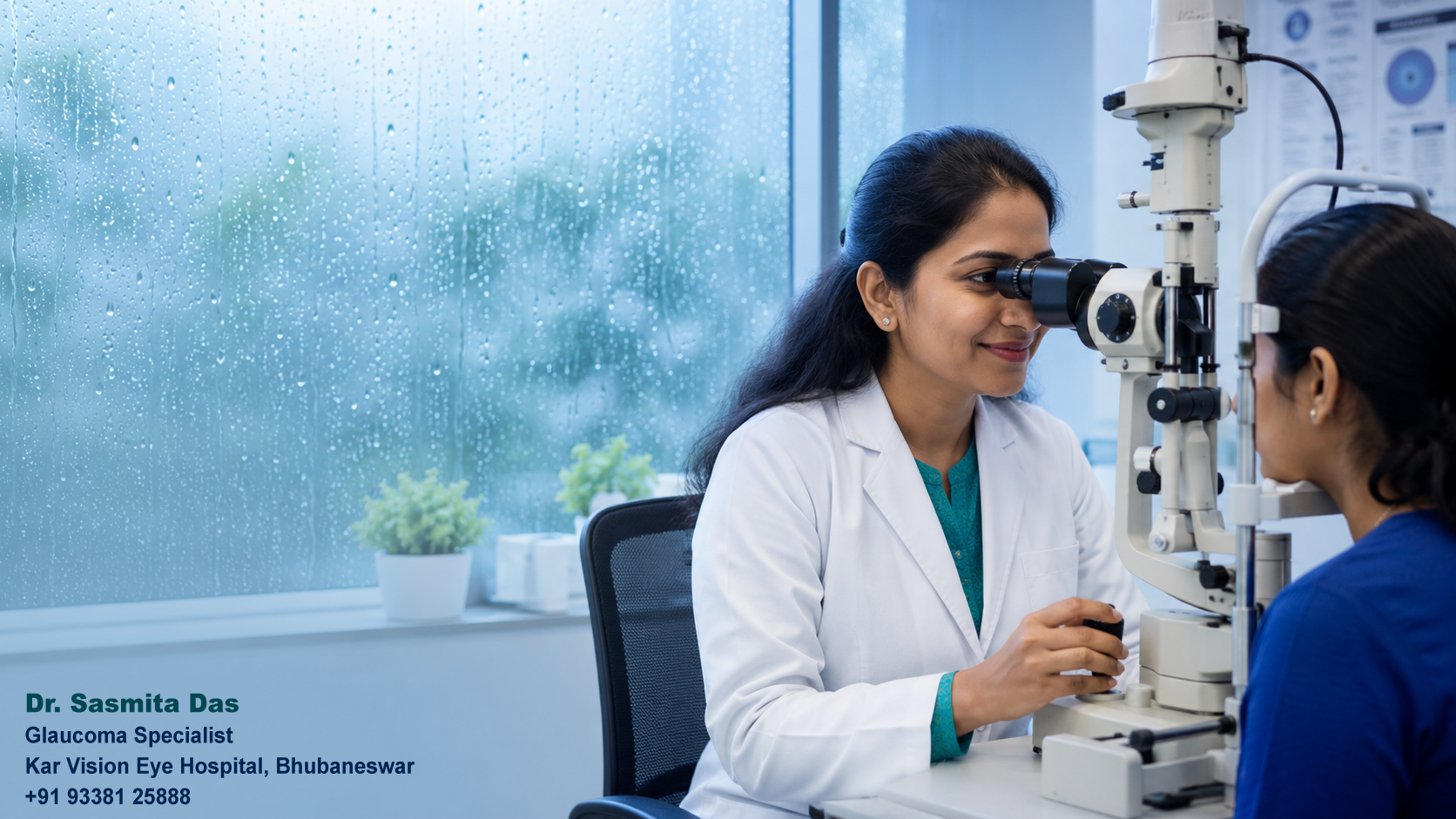
The monsoon season brings increased humidity, rainwater contamination, and a higher risk of eye infections and allergies. Learn how to protect your eyes from conjunctivitis, styes, corneal infections, and other common rainy-season eye problems with expert advice from Dr. Sasmita Das, Glaucoma Specialist at Kar Vision Eye Hospital, Bhubaneswar.
Eye Care During the Rainy Season: Protect Your Vision in the Monsoon
By Dr. Sasmita Das
Glaucoma Specialist
Kar Vision Eye Hospital, Bhubaneswar
The arrival of the monsoon brings welcome relief from the summer heat, but it also increases the risk of eye infections and allergies. High humidity, stagnant water, and frequent exposure to contaminated rainwater create an environment where bacteria, viruses, and fungi can thrive. Taking a few simple precautions can help keep your eyes healthy throughout the rainy season.
Common Eye Problems During the Monsoon
1. Viral Conjunctivitis (Pink Eye)
One of the most common eye infections during the rainy season is conjunctivitis. It spreads easily through direct contact with infected secretions or contaminated objects.
Symptoms
- Redness of the eyes
- Watering
- Irritation or burning
- Sticky discharge
- Swollen eyelids
- Sensitivity to light
2. Allergic Conjunctivitis
Pollens, mold, dust, and increased humidity can trigger eye allergies.
Symptoms
- Intense itching
- Redness
- Excessive tearing
- Puffy eyelids
3. Stye (Eyelid Infection)
A stye is a painful swelling on the eyelid caused by bacterial infection of the oil glands.
4. Corneal Infections
People who wear contact lenses are at greater risk of developing serious corneal infections, especially if proper lens hygiene is not maintained.
Tips to Keep Your Eyes Healthy During the Rainy Season
Wash Your Hands Frequently
Avoid touching or rubbing your eyes with unclean hands. Good hand hygiene is the best way to prevent eye infections.
Keep Your Eyes Dry
If rainwater enters your eyes, rinse them gently with clean drinking water or sterile saline solution. Avoid using dirty towels to wipe your face.
Avoid Sharing Personal Items
Do not share towels, handkerchiefs, eye cosmetics, or eye drops, especially if someone in the family has conjunctivitis.
Practice Contact Lens Hygiene
- Wash hands before handling lenses.
- Never sleep with contact lenses unless advised by your eye doctor.
- Replace lens solution regularly.
- Avoid wearing contact lenses while swimming or during active eye infections.
Wear Protective Eyewear
Use protective glasses or sunglasses while riding a two-wheeler to shield your eyes from rain, dust, and insects.
Maintain Good Eye Hygiene
Clean eyelids gently if you have excessive oiliness or recurrent styes. Remove eye makeup before sleeping.
Eat a Healthy Diet
Include foods rich in Vitamin A, Vitamin C, Vitamin E, Zinc, and Omega-3 fatty acids, such as:
- Carrots
- Spinach
- Citrus fruits
- Fish
- Nuts
- Green leafy vegetables
These nutrients help maintain healthy eyes and support good vision.
Special Advice for Children
Children often spread conjunctivitis quickly in schools.
Parents should:
- Teach children not to rub their eyes.
- Encourage frequent hand washing.
- Keep infected children at home until advised by a doctor.
- Avoid sharing towels and pillows.
Tips for People with Glaucoma
Patients with glaucoma should continue using their prescribed eye drops regularly, even during the rainy season. Do not stop medications because of mild redness without consulting your ophthalmologist.
Keep your medicines in a cool, dry place and attend scheduled follow-up visits as advised.
When Should You See an Eye Doctor Immediately?
Seek immediate medical attention if you experience:
- Severe eye pain
- Sudden loss or blurring of vision
- Injury to the eye
- Light sensitivity with redness
- Thick yellow or green discharge
- Symptoms that persist for more than two days
- Redness or pain while wearing contact lenses
These symptoms may indicate a serious eye condition requiring prompt treatment.
Common Myths About Eye Care During the Rainy Season
Myth: Rainwater is clean and can wash the eyes safely.
Fact: Rainwater may contain pollutants, dust, bacteria, and harmful chemicals that can irritate or infect the eyes.
Myth: Every red eye is conjunctivitis.
Fact: Redness can also result from allergies, dry eye disease, glaucoma, corneal ulcers, or inflammation. A proper eye examination is necessary for accurate diagnosis.
Myth: Antibiotic eye drops should be used for every red eye.
Fact: Many cases of viral conjunctivitis do not require antibiotics. Self-medication can delay proper diagnosis and appropriate treatment.
Final Message
The rainy season is enjoyable, but your eyes deserve extra care during this time. Simple habits such as washing your hands regularly, avoiding eye rubbing, maintaining proper contact lens hygiene, and seeking early medical attention for persistent symptoms can prevent most eye problems.
Healthy eyes make every season more beautiful.
If you notice redness, pain, discharge, or blurred vision, consult an ophthalmologist without delay. Early diagnosis and timely treatment remain the best ways to preserve good vision.
Dr. Sasmita Das
Glaucoma Specialist
Kar Vision Eye Hospital, Bhubaneswar
0 Comments
No comments yet. Be the first to comment!