
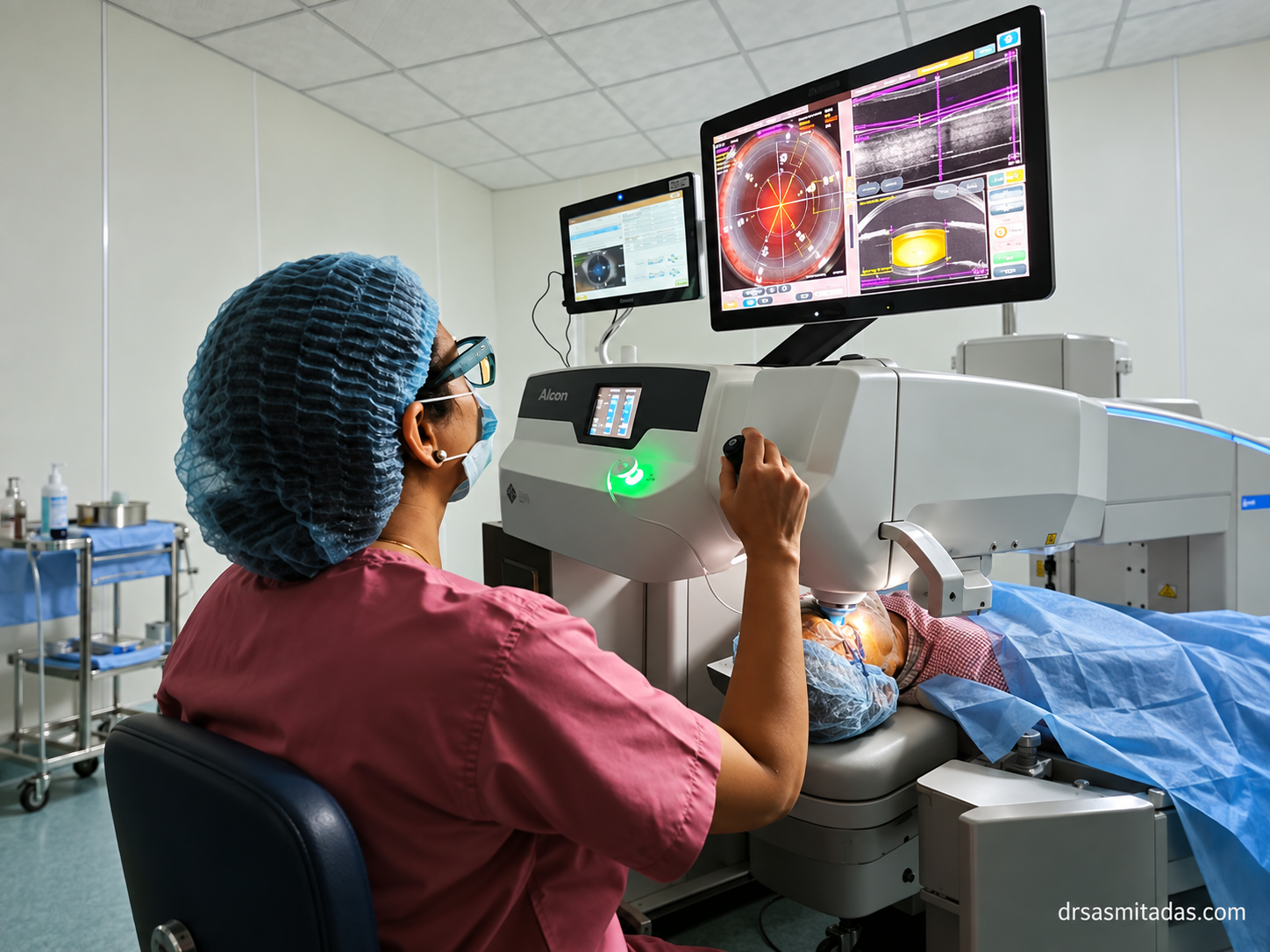
Discover how femtosecond laser-assisted cataract surgery uses precise laser assistance for selected steps while the surgeon completes the procedure and implants an intraocular lens.
FLACS Cataract Surgery: Precision, Safety and the Future of Cataract Care
Femtosecond Laser-Assisted Cataract Surgery (FLACS) is an important technological development in modern cataract surgery. It uses a computer-guided femtosecond laser to perform selected steps with precision and consistency.
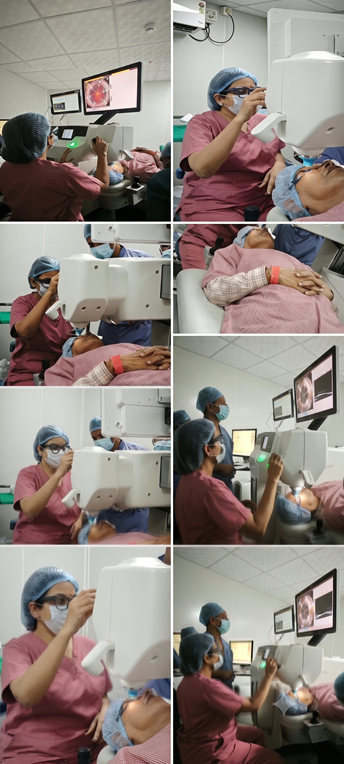
Cataract surgery has evolved from large-incision procedures to modern phacoemulsification through a small incision. FLACS combines advanced imaging and laser assistance with the established surgical techniques used to remove the cataract and implant a new lens.
Femtosecond Laser-Assisted Cataract Surgery (FLACS) represents an important technological evolution in modern cataract surgery. By using a femtosecond laser to perform selected steps of cataract surgery with computer-controlled precision, FLACS aims to make surgery more standardized, reproducible and potentially gentler on ocular tissues.
Cataract surgery has already evolved dramatically—from large-incision surgery to modern phacoemulsification through a micro-incision. FLACS is the next step in this evolution, combining advanced imaging, laser precision and conventional phacoemulsification.
What is FLACS?
FLACS is not a completely laser-based cataract operation. Rather, the femtosecond laser performs some of the critical initial steps, after which the surgeon completes the procedure using standard surgical techniques.
Depending on the platform and surgical plan, the femtosecond laser can assist with:
- Creation of corneal incisions
- Creation of a precise anterior capsulotomy
- Nuclear fragmentation or lens pre-chop
- Astigmatic keratotomy in selected cases
The fragmented lens is subsequently removed, usually using phacoemulsification, and an intraocular lens (IOL) is implanted.
0 Comments
No comments yet. Be the first to comment!